JANSNO X50S Real-World Range Test Review | Norman Creek Bikeway
Real-World Range Test: JANSNO X50S E-Bike on the Norman Creek Bikeway (Brisbane)
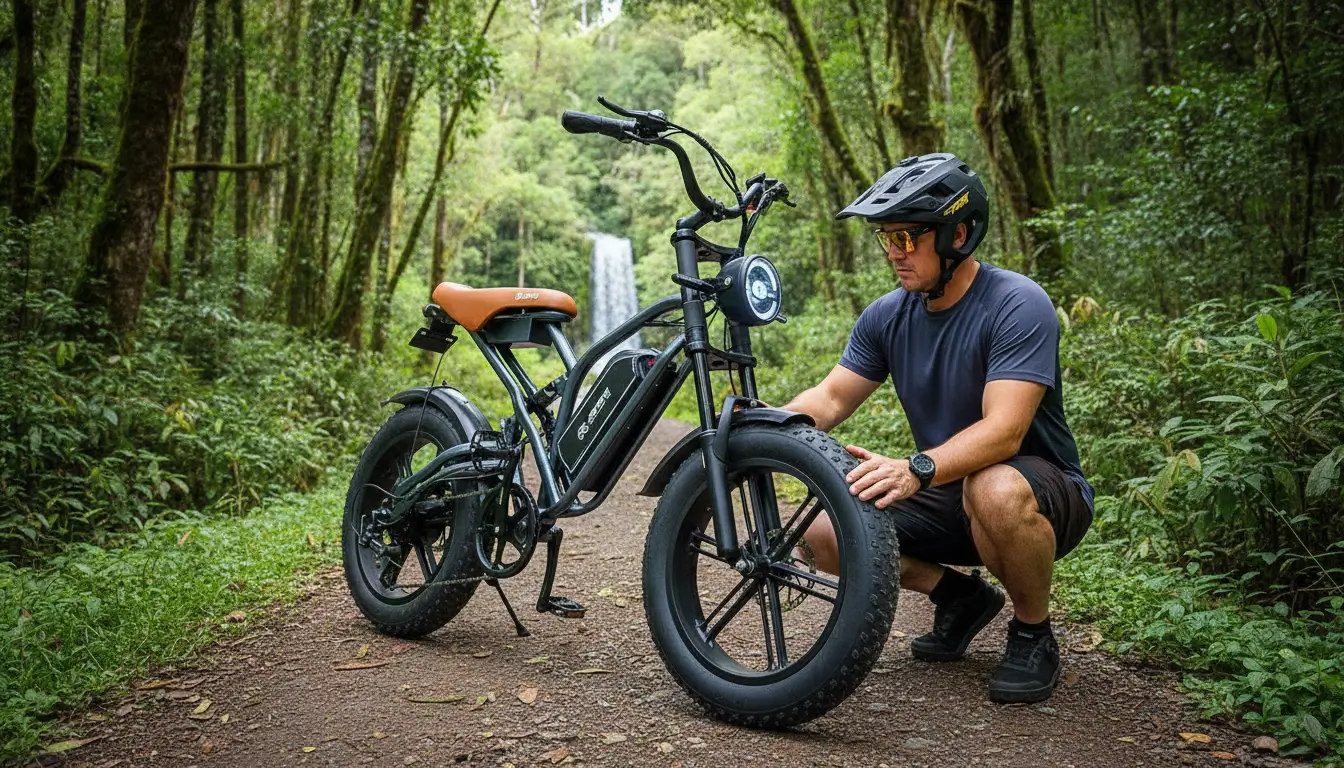
This review focuses on the JANSNO X50S e-bike and how it performs in the real world, not on paper. Instead of repeating manufacturer claims, I took the bike out for a long ride along the Norman Creek Bikeway in Brisbane, mixed in with the V1 cycleway, city paths, hills, wind, stops, and real traffic conditions.
The goal was simple: find out how far the X50S actually goes on a charge when ridden the way most people ride, not crawling along at minimum assist. I’ve found manufacturers often base their impressive range numbers on unrealistic conditions, and I wanted to find the practical truth.
JANSNO X50S Key Specifications

- Motor: 1000W rear hub motor
- Torque: Claimed 85Nm
- Battery: 48V 672Wh removable battery
- Claimed Range: Up to 50–75 miles (pedal assist)
- Real-World Range Tested: ~52.4 km (32.5 miles)
- Top Speed: Approx. 30–31 mph (settings dependent)
- Tires: 20” fat tires
- Gearing: Shimano 7-speed
- Brakes: Mechanical disc brakes
- Suspension: Front suspension fork
Build Quality and First Impressions
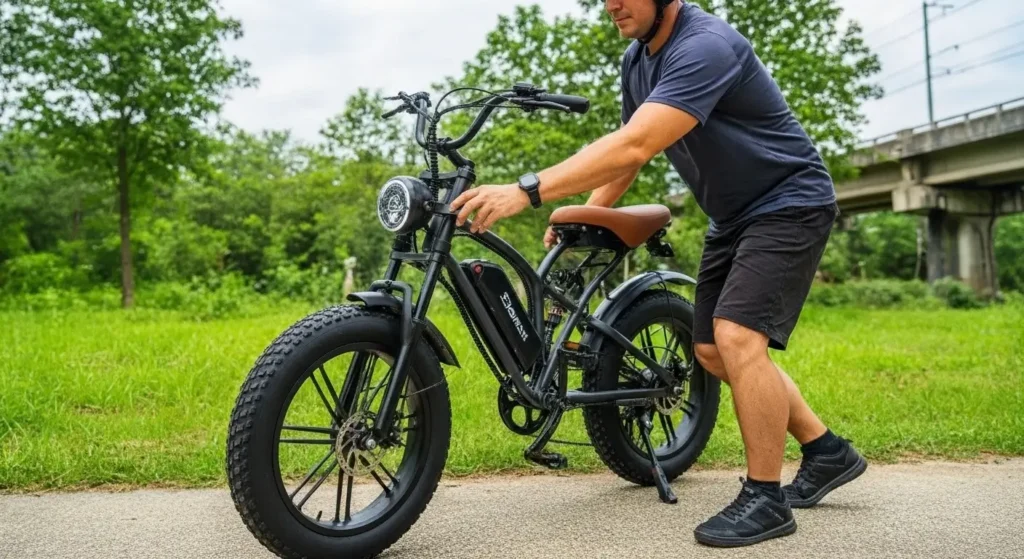
The X50S feels solid and confidence-inspiring straight away. It’s a heavy bike, but the weight translates to stability at speed. The frame feels sturdy, welds are acceptable for the price, and nothing felt loose or poorly finished during the ride.
The compact 20-inch fat-tire design works well for urban riding and shared paths. It’s not a refined or lightweight design, but it’s clearly built to handle potholes, rough bike paths, and less-than-perfect surfaces without drama.
Motor Performance in Real Riding
The 1000W rear hub motor has plenty of punch. Acceleration is strong, especially in higher pedal assist levels, and it tackled Brisbane’s hills with ease, requiring only light pedaling effort from me.
Pedal assist level three felt like the most usable “sweet spot” for real-world riding, allowing a cruising speed of around 30 km/h without excessive battery drain. Levels four and five are fun and deliver serious speed, but you can almost watch the battery indicator drop.
Battery and Real-World Range Test Results
This ride was not done at “marketing speed.” I rode it like you would on a normal day.
Test conditions included:
- Route: Norman Creek Bikeway, V1 cycleway, and inner-city streets.
- Assist Level: Mixed pedal assist (mostly PAS 3, with some PAS 4/5)
- Speed: Cruising around 30 km/h
- Terrain: Hills, headwinds, tunnels, and traffic lights
- Rider Input: Active pedaling throughout, not throttle-only
Final result:
- Distance covered: 52.4 km
- Battery remaining: 1 bar (display blinking)
This result makes complete sense for a 672Wh battery paired with a powerful 1000W motor. If I had ridden conservatively at lower assist levels (PAS 1-2) and slower speeds, I believe 60–65 km is realistic. The manufacturer’s higher advertised figures only apply to slow, low-assist riding—conditions that don’t reflect how most people use a bike like this.
The “Battery Bar Reality Check”:
During the ride, the battery indicator behaved as expected for this category. Under heavy load like climbing a hill, the display would drop a bar quickly. When easing off on a flat section, it sometimes climbed back up. This is typical but means you should never trust the last two bars; plan your trip by the distance you’ve already covered, not by the optimistic display.
Comfort and Handling
Comfort is a strong point. The seat is supportive over longer rides, and the upright riding position keeps back and shoulder fatigue down—a big plus for commuting. The 20-inch fat tires are the star here, effectively smoothing out rough paths, cracks, and gravel, making the bike exceptionally well-suited to Brisbane’s varied shared paths.
At speed, the bike feels planted, stable, and predictable. It’s not nimble like a lightweight commuter bike, but it inspires confidence, even above 35 km/h.
Braking and Safety
This is the bike’s most significant compromise. The mechanical disc brakes work, but they are its weakest point for a machine with this much power and weight. Stopping requires a firm, deliberate pull on the levers, especially at higher speeds. For safety and performance, a hydraulic brake upgrade is highly recommended and would be my first modification.
On a positive note, the tire grip is excellent, and the wide footprint adds tremendous confidence on mixed or loose surfaces. The included horn is also surprisingly loud and useful for alerting others on shared paths.
What I Liked and What Could Be Better
Pros:
- Strong 1000W motor with great acceleration and hill-climbing.
- Comfortable, stable ride ideal for longer commutes or recreational exploring.
- Delivered an honest 50+ km real-world range at practical riding speeds.
- Good value for money given the power and spec on paper.
- Fat tires handle rough and loose paths superbly.
Cons:
- Mechanical brakes only feel underpowered and require an upgrade for serious use.
- Battery indicator lacks precision, leading to potential “range anxiety.”
- Heavy bike (approx. 40kg) makes it difficult to lift or carry.
- Range drops quickly when you use the higher power levels the bike is capable of.
Who the JANSNO X50S Is Best For
This bike is a great fit for:
- Riders who want power and comfort on a budget.
- Casual commuters and recreational riders who face mixed terrain or poor road surfaces.
- Taller or heavier riders who need a sturdy, stable platform.
- Those who value stability and off-path capability over a lightweight, nimble feel.
It is not ideal for:
- Riders chasing maximum range at high speeds.
- Anyone needing a lightweight e-bike for frequent carrying or apartment living.
- Riders who take manufacturer range claims at face value without considering real-world factors.
Final Verdict
The JANSNO X50S delivers solid, real-world performance for its price. My test on Brisbane’s paths proves that with a 672Wh battery, 50–60 km is a dependable, usable range when riding at normal, practical speeds. This makes it a viable machine for most daily commutes and weekend adventures, provided you can charge at your destination.
If you understand the range trade-offs and are prepared to consider a brake upgrade for safety, the X50S offers strong value. It’s a powerful, comfortable, and capable workhorse that delivers a genuinely fun ride for everyday, real-world use-just don’t expect it to deliver paper specs on pavement.