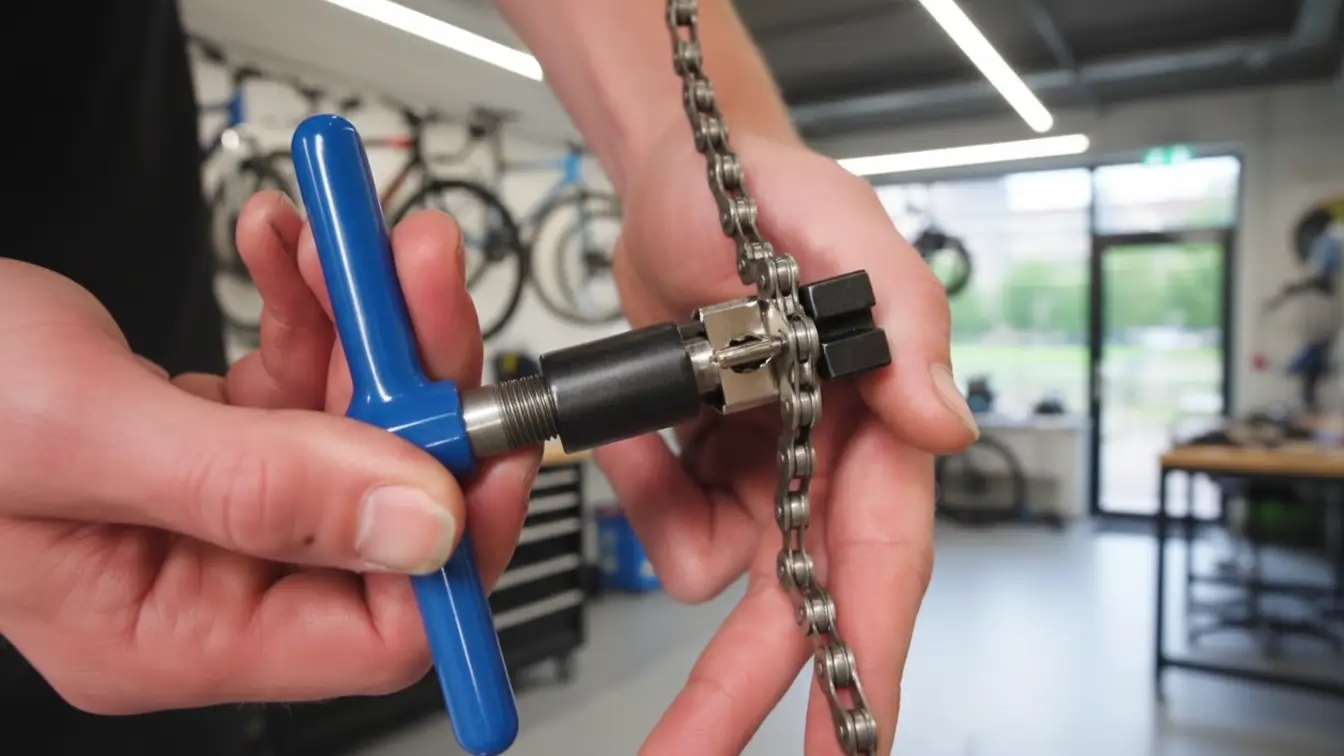
How to Change a Bike Chain Without a Chain Tool: A MacGyver’s Guide
There you are, ready for a ride. You lift your bike, give the pedals a spin, and hear it-a grating, sloppy sound. Or maybe, mid-climb, your chain suddenly gives up the ghost, snapping and leaving you stranded. A worn or broken chain is one of the most common mechanical issues a cyclist can face.
While every well-prepared cyclist should own a chain tool, life doesn’t always go according to plan. Maybe you’re on a remote trail, in your garage with a missing toolkit, or just eager to learn a self-reliant skill. Whatever the reason, knowing how to change your bike chain without the dedicated tool is a brilliant piece of mechanical ingenuity.
This guide will walk you through the entire process, from diagnosing a worn chain to installing a new one using common household items. It’s a method that requires patience and care, but it absolutely works.
Recommended Products for a No-Tool Chain Change
Make emergency bike chain replacement easier with these practical Amazon picks:
- KMC X11 11-Speed
- SRAM PC-1110
- Shimano CN-HG601
- KMC Missing Link
- SRAM PowerLock
- TEKTON Punch Set
- Estwing Ball Peen Hammer
- Klein Tools Pliers
- Park Tool Chain Brush & Degreaser
Before You Begin: Understanding the Mission
Replacing a chain isn’t just about getting the old one off and the new one on. Modern bicycle chains are connected using a master link (also called a quick-link) or are permanently pinned together. The method we’ll use focuses on dealing with a new chain that has a master link, as this is the most common scenario for a tool-free installation.
Why Chains Wear Out and Why It Matters
A chain doesn’t just “break” out of the blue. Over time, it stretches from wear on the pins and rollers. This elongated chain no longer meshes perfectly with your gears (cassette) and front chainrings, causing poor shifting, skipping under power, and accelerated wear on those expensive components. Replacing a worn chain early is the cheapest maintenance you can do for your bike’s drivetrain.
The Tools You Won’t Be Using (And What You Will)
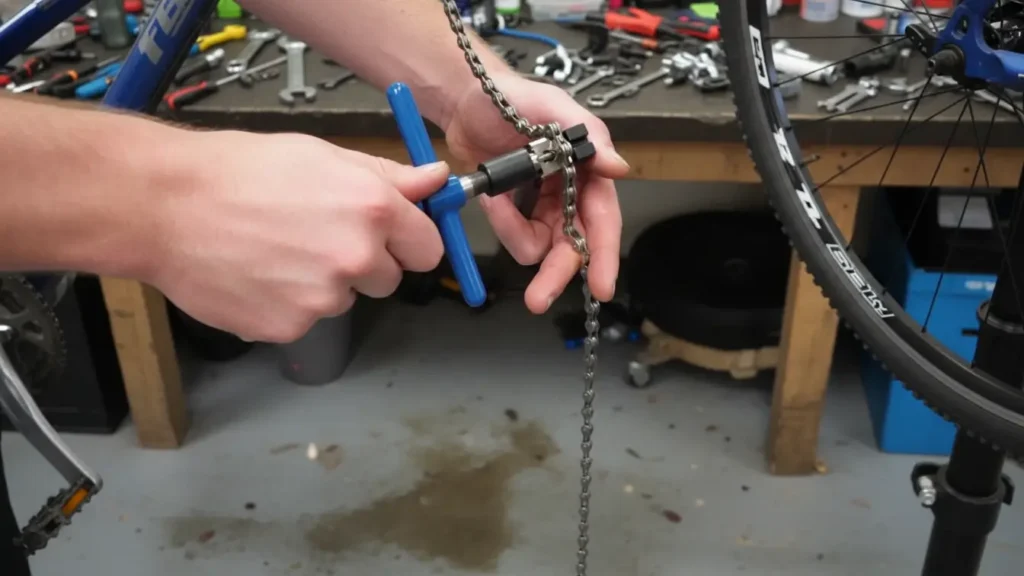
We’re bypassing the standard chain breaker tool. Instead, our toolkit will consist of:
- The New Chain: Ensure it’s the correct speed and length for your bike (e.g., 9, 10, 11, 12-speed).
- A Sturdy Piece of String, a Zip Tie, or a Shoelace: This is our “third hand.”
- A Small Punch, a Nail, or a sturdy Allen Key: To act as a drift.
- A Hammer: For gentle, precise taps.
- Needle-Nose Pliers (Optional but Helpful): For handling the master link.
- Rag and Degreaser: For clean hands and a clean drivetrain.
The Step-by-Step “No-Tool” Chain Replacement
Important Safety Note: This method requires force applied with a hammer. Work on a stable surface, protect your eyes from flying metal fragments, and be patient. Rushing will lead to damaged parts or injury.
Step 1: Removing the Old Chain
First, we need to get the old chain off the bike.
- Shift onto the Smallest Chainring and Smallest Rear Cog. This creates the least amount of tension on the chain, making it easier to handle.
- Locate the Master Link. If your old chain has one, this is your ticket off. A master link looks different from the other links; it often has a small groove or a different color plate. Look for markings like “Shimano Quick-Link,” “SRAM PowerLock,” or “KMC Missing Link.”
- Disconnect the Master Link. Squeeze the two side plates of the chain together laterally (from the side) while pushing the links apart. If it’s stubborn, use your needle-nose pliers to gently squeeze and release it. If there is no master link, or if it’s broken, you can simply remove the chain from the drivetrain since it’s being discarded.
Step 2: Preparing the New Chain
This is the most critical part of the process. Do not remove the new chain from its packaging until you are ready to size it.
- Determine the Correct Chain Length. The easiest way is to lay the old chain next to the new one. Line them up, link for link, and this will give you the perfect length. Ensure the new chain is routed through the front derailleur cage correctly before joining.
- The “Big-Big” Method (Alternative). If you don’t have the old chain, route the new chain onto the largest front chainring and the largest rear cog. Do NOT route it through the rear derailleur. Pull the two ends together so they meet. The correct length is where the two ends just meet with the derailleur cages pulled forward slightly. This ensures you have enough chain for the biggest gears without over-stressing the derailleur.
- “Saving” the Extra Links: Once you have the correct length, note which link you need to separate. New chains are always longer than needed.
Step 3: The “No-Tool” Break and Rejoin Technique
Here is where the magic happens. We will break the new chain to the correct length and then install it using its master link.
Breaking the Chain to Length:
- Secure the Chain. Find the link you need to push out. Place the chain on a hard, stable surface like a piece of scrap wood or a garage floor. You can use a nail set in a block of wood as an anvil.
- Align Your Punch. Take your small punch, nail (with the head filed down), or the short end of a hex key. Place the tip directly on the pin of the chain link you wish to remove.
- Apply Controlled Force. Hold the punch steady and tap it firmly and squarely with the hammer. The goal is to push the pin out just far enough so that the chain separates. Be patient. It may take several solid taps. The pin does not need to come all the way out—just enough to free the outer plate.
Installing the Chain and Master Link:
- Route the Chain. Route the new chain correctly through your bike’s front and rear derailleur cages. This is a common mistake, so double-check your bike’s manual or look at a diagram online for your specific derailleur model.
- Use Your “Third Hand.” Connecting the chain ends with the master link can be fiddly. Use your string or a zip tie to loosely hold the two ends of the chain together, taking the tension off. This will free up both your hands.
- Connect the Master Link. The master link consists of two special plates and two pins. Place one plate on one end of the chain, and the other on the opposite end. They should click together. You should feel them seat into place.
- Secure the Connection. Pull the chain taut. The connection should now be secure enough to pedal gently. To fully lock it, get on the bike and pedal backwards while gently applying the rear brake. The tension will snap the master link into its final, secure position. You should hear a definitive “click.”
Post-Installation Check and Troubleshooting
Your mission is nearly complete, but a final check is non-negotiable.
- Check for Stiff Links: Slowly pedal the bike by hand (lift the rear wheel and turn the cranks). Watch the chain as it goes through the derailleur pulleys. If a link is stiff and doesn’t bend properly, it will “kick” as it goes through. Gently flex that specific link sideways with your hands to loosen it up.
- Test the Shifting: Run through all your gears. The chain should shift smoothly and quietly. If it’s noisy or hesitant to shift, you may have a routing error or the chain length might be incorrect.
- The Final Safety Inspection: Do a visual check of the master link. Ensure it is fully seated and looks identical to the diagrams on its packaging.
The Inevitable Caveats and When to Seek Professional Help
While this method is empowering, it’s important to know its limitations.
- Risk of Damage: Using a punch and hammer can deform the chain pin or plates if you’re not careful. This is why a dedicated chain tool is superior—it applies force evenly and correctly.
- Not for Reusable Master Links: Some master links (like SRAM’s older PowerLock) are designed for one-time use. Forcing them without the proper tool can damage them.
- The Best Solution is Still the Right Tool: This guide is for emergencies and learning. For regular maintenance, investing in a simple, inexpensive chain tool is highly recommended. It’s faster, safer, and guarantees a professional result.
Final Takeaway
Knowing how to change a bike chain without a tool transforms you from a passive rider into a self-sufficient mechanic. It’s a skill that can save a ride and build immense confidence. While the dedicated tool is always the better option for a clean, reliable job, the ability to improvise with a punch, a hammer, and a little ingenuity is a testament to the fact that where there’s a will, there’s a way. So, get to know your bike, keep a spare master link in your saddlebag, and never let a broken chain end your adventure.
Helpful Takeaway: A broken chain doesn’t have to mean a broken ride. With a spare chain, a master link, and common workshop items, you can perform a field repair that gets you home. Remember this method, but prioritize buying a simple chain tool for your permanent toolkit—it’s a small investment for a lifetime of smooth cycling.