Faster E-Bikes Are Safer: How Matching Traffic Speed Reduces Risk
The idea that slower equals safer is a deeply held belief, and while it holds some truth in general, it simply doesn’t apply to electric bicycles moving through city traffic.
This conventional wisdom has led to overly restrictive speed limits. Most US states permit certain e-bikes to hit $28 \text{ mph } (45 \text{ km/h})$, yet many cities are trying to force lower speeds. New York City, for instance, recently capped e-bikes at just $15 \text{ mph}$. This makes NYC riders slower than even much of Europe, which generally sets the limit at $25 \text{ km/h } (15.5 \text{ mph})$.
But here is the essential flaw in that logic: faster electric bikes-specifically those cruising comfortably between 25 and 28 mph-are actually safer in real-world traffic.
Why? Because when your e-bike can match the pace of surrounding vehicles, you transition from being a road obstacle to a traffic participant. That shift changes everything.
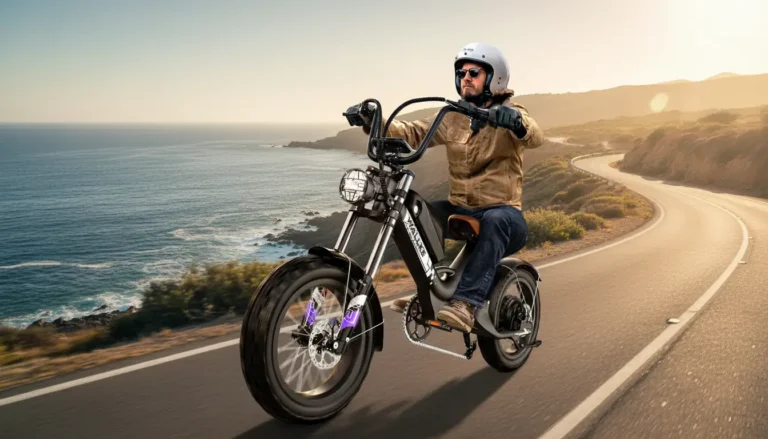
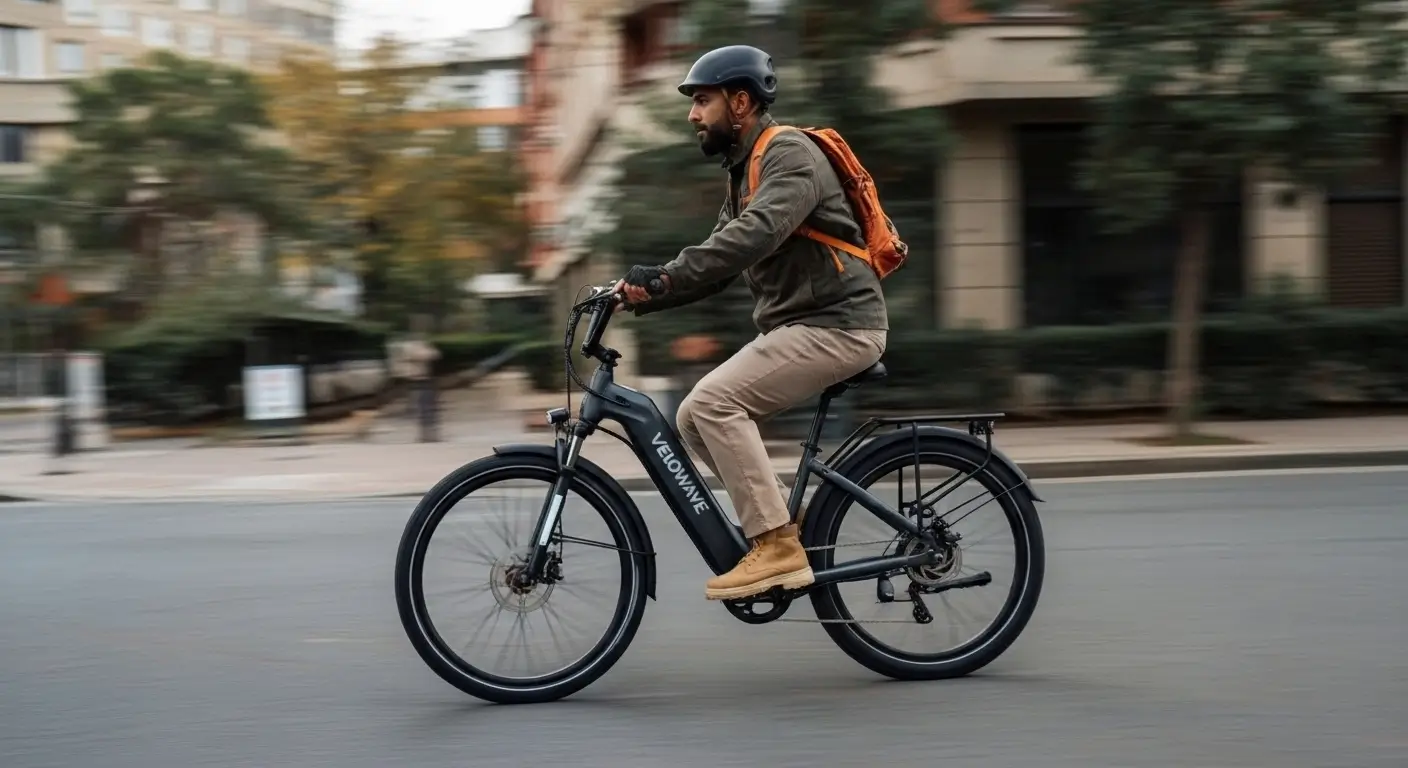
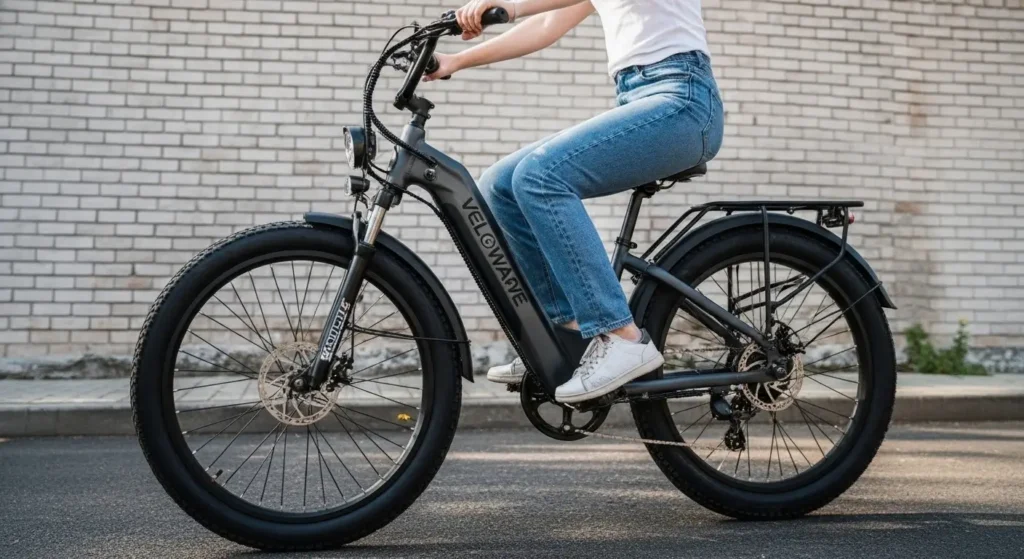
If you’re considering upgrading, bikes like the Velowave Electric Mountain Bike are excellent examples of models designed to handle higher speeds safely. It offers strong acceleration, stable geometry, and reliable braking—features that help riders maintain better control when cruising at 25–28 mph.
You can check it out here on Amazon:
Why Being Passed is the Real Danger
As a veteran e-bike enthusiast, I have logged countless hours on every kind of electric bike imaginable, on every type of road, and in multiple countries. One truth stands out: the most frightening and dangerous part of city riding is not going fast. It’s being passed-repeatedly-by massive vehicles. Cars, trucks, buses—anything weighing a hundred times more than your bike. Often, they pass with mere inches to spare.
When you ride a 15 or $20 \text{ mph}$ limited e-bike on a street where cars move at $25$ to $35 \text{ mph}$, you are actively impeding the flow of traffic. Drivers grow impatient. They execute unsafe passes. They “buzz” you uncomfortably close to the curb. Even well-meaning drivers must swerve into the next lane to get around you. Your legal right to the lane does not matter; this speed mismatch creates a perfect setup for conflict.
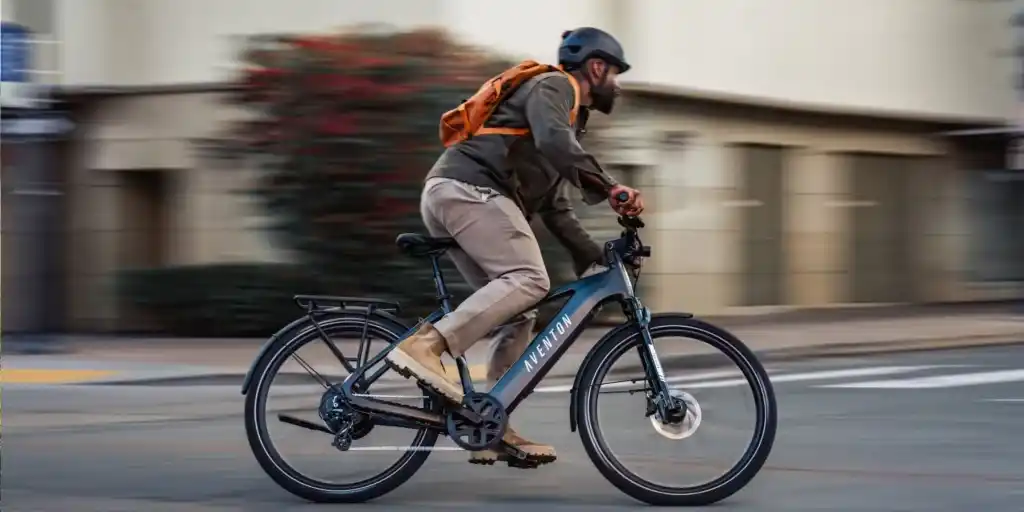
Now, consider a Class 3 e-bike that can maintain $28 \text{ mph}$ with pedal assist. The dynamic flips completely. You are no longer the slowpoke hugging the shoulder. You are riding in the lane, keeping pace with cars. You become predictable and visible. You can safely merge, and if you choose to let a car pass, you can quickly reach a safe spot to pull over. You do not have to spend your ride dodging into the gutter just to stay out of the way. You are not in the way; you are part of the way. You are an equal participant in terms of speed.
This slight increase in speed transforms you from a second-class road user into a fully integrated part of the traffic flow. That is not just better for the rider; it benefits drivers by reducing the number of overtaking events and simplifying shared road use for everyone.
The Unintended Consequence of Low Limits
I am not suggesting e-bikes should go $50 \text{ mph}$. A reasonable ceiling exists, and the current US limit of $28 \text{ mph}$ for Class 3 bikes is a logical line. However, the notion that “anything over $20 \text{ mph}$ is inherently dangerous” simply does not align with urban traffic reality.
If anything, artificially limiting e-bikes to sub-traffic speeds creates more danger by maximizing risky interactions with passing vehicles. Think of the annoying car on the interstate going $50 \text{ mph}$ when everyone else is doing $70 \text{ mph}$; it is a hazard to itself and others. Why would we intentionally force vulnerable e-bikes into the same situation?
Furthermore, experienced pedal cyclists routinely exceed $28 \text{ mph}$ on standard road bikes. Many Class 2 or 3 e-bikes also hit $25 \text{ mph}$ with ease, especially downhill. Despite this, we are not seeing an epidemic of high-speed e-bike crashes. While crashes occur, the lower energy involved means they pose a significantly smaller threat to life or limb than car accidents.
The true problem is not speed itself; it is context. It is the mixing of very slow vehicles with fast ones without giving the slow vehicles the ability to keep pace when necessary.
Modern Bikes and Smarter Solutions
Modern e-bikes are far better equipped to handle higher speeds. Features like hydraulic disc brakes, integrated lighting, wider, grippier tires, and stable geometries are now standard. These are not flimsy beach cruisers with motors; they are robust machines built to move faster and carry heavier loads safely at $25$ to $28 \text{ mph}$.
And the riders? They are mostly responsible commuters, parents, and students seeking a viable alternative to driving-not daredevils. The handful of rule-breakers and high-powered, non-street-legal vehicles are outliers, not the majority. Focusing on these exceptions is a clear example of confirmation bias.
This is what frustrates me about efforts to impose low speed caps. The goal is often “preventing injury,” but the danger being overlooked is that a slower bike might put the rider in more harm’s way by forcing them to the margins of the road, where they are less visible and constantly being overtaken.
To be clear: I acknowledge that slower riding is undeniably safer in specific scenarios, such as crowded bike paths, dense pedestrian zones, or poor weather. A bike zipping through a shared-use trail at $28 \text{ mph}$ is irresponsible. Pushing for faster e-bikes does not mean encouraging reckless riding.
We offer driver’s education instead of installing $65 \text{ mph}$ speed limiters in every car. Similarly, as e-bikes become more powerful, the answer is not a blanket cap at $15$ or $20 \text{ mph}$. The answer is smarter infrastructure, better rider training, and rules that reflect real-world conditions.
We need to shift the conversation. Instead of fearing faster e-bikes, we should recognize their potential as safer, more efficient urban vehicles. Speed can be abused, but when used responsibly, it is a powerful tool for staying safe and in control on the road.
Not every e-bike rider needs to go $28 \text{ mph}$. But every e-bike rider should have the option to match traffic speed when conditions demand it. If cities are serious about reducing car dependence and improving safety for vulnerable road users, they must embrace this reality, not fight it.
Until the US invests in adequate cycling infrastructure, our city streets require a functional solution. For now, the safest place to be is often right in the middle of the lane, moving with traffic, not struggling behind it.