Top 10 Electric Bikes in 2026: The Ultimate Buyer’s Guide
Electric bikes are no longer a trend-they’re a transportation revolution. In 2026, e-bikes are smarter, lighter, more powerful, and more integrated than ever before. But as a professional e-bike technician, I can tell you this:
The best electric bike in the world is only as good as how well you maintain it.
In this guide, we’ll break down the Top 10 Electric Bikes in 2026, explain what makes each stand out, and—most importantly—cover the essential e-bike tools you’ll need to protect your investment.
Whether you’re a new rider, a DIY mechanic, or a small repair shop owner, this guide will help you choose wisely and maintain confidently.
What’s New in Electric Bikes in 2026?
Before diving into the list, here are the major trends shaping the market:
- Integrated batteries with improved thermal management
- Smart torque sensors and AI ride adaptation
- Mid-drive motors dominating performance segments
- Lightweight carbon and alloy hybrid frames
- App-based diagnostics and firmware updates
- Higher-capacity batteries with 70–120 mile ranges
These advancements mean better performance-but also more complex electric bike maintenance requirements.
Top 10 Electric Bikes in 2026
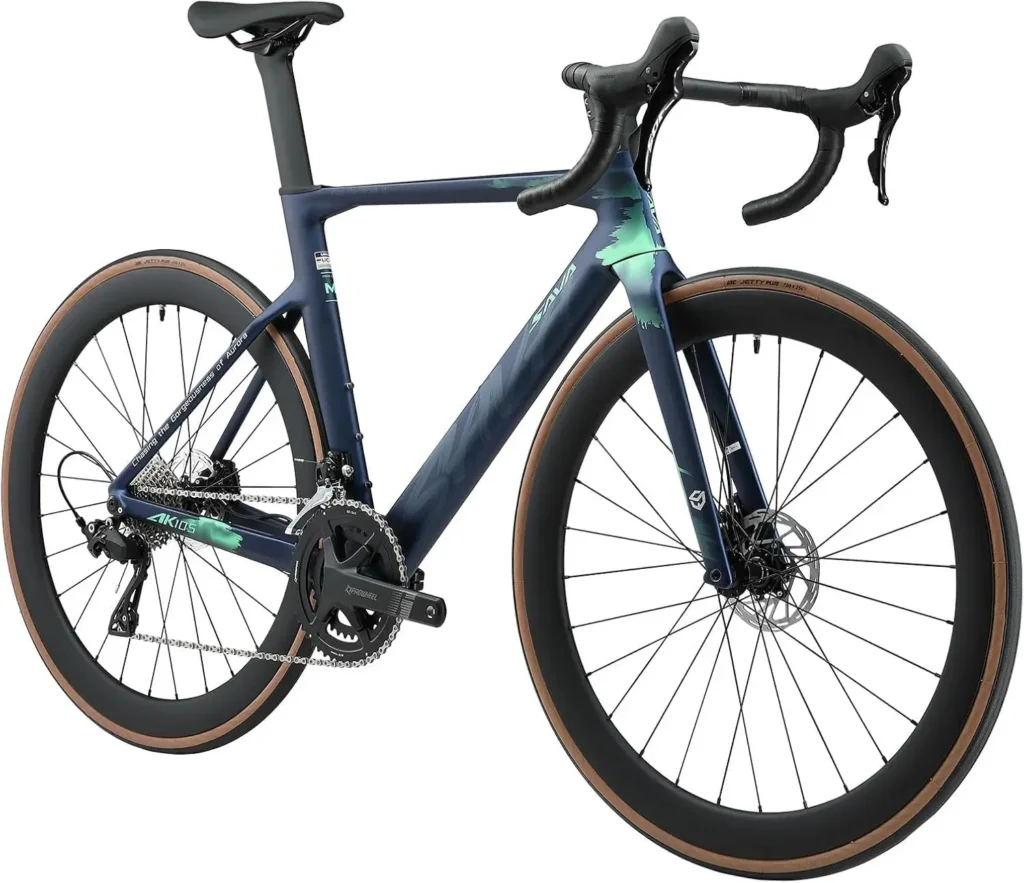
1. Specialized Turbo Vado 6.0 (2026 Edition)
Best for: Premium commuters
- 90Nm mid-drive motor
- 750Wh integrated battery
- Smart anti-theft GPS system
- Fully integrated lighting
A refined commuter machine with exceptional ride feel and smooth power delivery.
2. Trek Allant+ 9.9 XTR
Best for: Performance urban riders
- Carbon frame
- Bosch Performance Line CX
- Advanced smartphone integration
- High-end Shimano XTR components
Lightweight and incredibly responsive, this is a top-tier city weapon.
3. Giant Trance X Advanced E+
Best for: Trail riders
- 85Nm motor
- 800Wh battery
- Carbon front triangle
- 150mm suspension
Trail capability meets long-range endurance.
4. Rad Power RadRover 7 Pro
Best for: Affordable adventure
- Fat tires
- 750W hub motor
- 60+ mile range
- Excellent value
A strong entry point for beginners.
5. Cannondale Mavaro Neo Carbon 2
Best for: Comfort and luxury
- Step-through carbon frame
- Bosch Smart System
- Integrated radar
Ultra-smooth urban comfort.
6. Aventon Level.3
Best for: Budget commuters
- Torque sensor upgrade
- 70-mile range
- Competitive pricing
A strong value option with improved ride dynamics.
7. Santa Cruz Heckler SL E-MTB
Best for: Lightweight e-MTB enthusiasts
- SL motor system
- Aggressive geometry
- Trail-focused design
Feels closer to a traditional mountain bike.
8. Gazelle Ultimate C380+ HMB
Best for: European-style commuting
- Enviolo CVT drivetrain
- Belt drive
- Bosch Performance Line
Low-maintenance drivetrain ideal for daily riders.
9. Ride1Up Prodigy V3
Best for: Mid-range performance
- Brose motor
- Hydraulic brakes
- Clean integration
Excellent value-to-performance ratio.
10. Stromer ST7 (2026 Smart Edition)
Best for: High-speed commuters
- 45 km/h capability
- Advanced digital display
- Massive battery capacity
A high-tech commuter powerhouse.
Why Proper E-Bike Tools Matter in 2026
Modern electric bikes combine:
- High-torque drivetrains
- Sensitive electronic systems
- High-voltage battery packs
- Integrated wiring and controllers
Using standard bike tools—or worse, generic hardware tools—can:
- Strip torque-sensitive bolts
- Damage motor housings
- Compromise battery mounts
- Void warranties
That’s why investing in professional bike tools specifically designed for e-bikes is critical.
At E-BikeTools.com, we specialize in e-bike repair tools built for modern electric systems.
Essential E-Bike Tools Every Owner Should Have
1. Precision Torque Wrench (Digital or Click-Type)
Use Case:
Motor mounts, stem bolts, brake calipers, battery brackets.
E-bike frames and motors require precise torque specs. Over-tightening can crack carbon frames or distort motor casings.
Technician Tip:
Always torque motor mounting bolts in a cross pattern to avoid uneven stress.
2. Insulated Hex & Torx Key Set
Use Case:
Controller covers, battery housings, display mounts.
Electric bikes frequently use Torx bolts. Insulated tools reduce accidental shorting when working near wiring.
3. Cassette Lockring Tool & Chain Whip (Heavy-Duty)
E-bikes put far more torque on drivetrains than traditional bikes.
Standard chain tools often fail under load.
Pro Tip:
Use reinforced chain whips designed for high-torque systems.
4. Crank Puller & Bottom Bracket Tools (Motor-Compatible)
Mid-drive motors often integrate with bottom bracket assemblies.
Generic tools can damage splines or motor casings.
Always use motor-specific bottom bracket tools for Bosch, Shimano, or Brose systems.
5. E-Bike Chain Wear Indicator
Because of motor torque, e-bike chains stretch faster.
Check chain wear every 500–700 miles.
Replacing chains early protects expensive cassettes and chainrings.
6. Brake Bleed Kit (Hydraulic Systems)
E-bikes are heavier.
Heavier bikes = more braking force required.
Hydraulic brake systems need periodic bleeding for optimal performance.
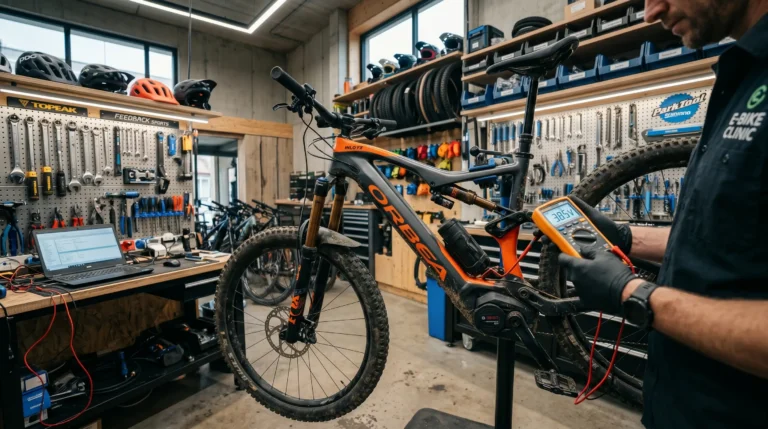
7. Battery Diagnostic Tester
Small repair shops especially benefit from battery diagnostic tools that check:
- Voltage stability
- Cell balance
- Charge cycle health
Proper diagnostics prevent unnecessary battery replacements.
Safety Considerations for Electric Bike Maintenance
Electric bikes introduce unique safety risks.
1. Battery Safety
- Never open sealed lithium battery packs
- Avoid metal tools near exposed terminals
- Store batteries at 40–60% charge for long-term storage
2. Electrical Components
- Power off before servicing
- Disconnect battery before drivetrain work
- Avoid pressure washing near motor seals
3. Weight Handling
E-bikes are heavier.
Use:
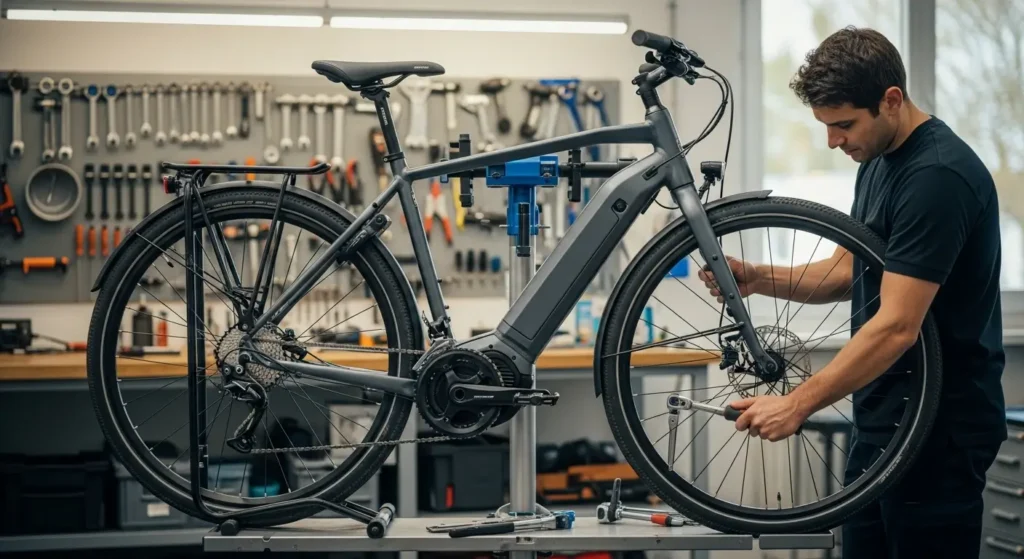
- Proper bike repair stands rated for 70+ lbs
- Secure clamping points
Common Mistakes When Using Improper Tools
From my technician experience, these are the most frequent errors:
- Using non-torque wrenches on carbon frames
- Stripping Torx bolts with worn hex keys
- Forcing crank removal without proper pullers
- Using automotive grease on electrical connectors
- Ignoring chain wear until drivetrain failure
These mistakes often cost hundreds—or thousands—in repairs.
Pro Technician Tips for Long-Term Performance
- Clean drivetrain every 150–200 miles
- Check motor bolts every 1,000 miles
- Update firmware via manufacturer apps
- Replace brake pads earlier than on standard bikes
- Use high-quality lubricants rated for e-bike torque
Routine electric bike maintenance dramatically extends lifespan.
Frequently Asked Questions
Do e-bikes require special tools?
Yes. Due to higher torque and integrated electronics, dedicated e-bike repair tools are highly recommended.
How often should I service my electric bike?
Basic inspection every 500 miles. Full drivetrain and brake service every 1,000–1,500 miles.
Are e-bike chains different from regular bike chains?
Many manufacturers offer reinforced e-bike-specific chains designed for higher torque loads.
Can I use a regular bike stand?
Only if it’s rated for heavier weights. Many electric bikes exceed 55–70 lbs.
Is battery maintenance complicated?
Not if handled properly. Avoid extreme temperatures and use manufacturer-approved chargers.
Final Thoughts: Choose Smart, Maintain Smarter
The Top 10 Electric Bikes in 2026: The Ultimate Buyer’s Guide highlights how advanced and capable today’s electric bikes have become.
But ownership doesn’t stop at purchase.
Whether you ride a premium commuter or a rugged trail machine, proper electric bike maintenance is what protects your investment.
Using high-quality e-bike tools and professional bike tools ensures:
- Longer component lifespan
- Safer rides
- Better performance
- Lower long-term costs
At E-BikeTools.com, we provide specialized tools designed specifically for modern electric bikes—trusted by DIY riders and professional repair shops alike.
Explore our premium collection of e-bike repair tools today and maintain your electric bike like a pro.