E-Bike Battery Care: The Complete Guide to Extending Your E-Bike Battery Life
Your e-bike’s battery is the heart, soul, and-let’s be honest-the most expensive component of your electric ride. With proper care, a quality lithium-ion battery can easily provide 500 to 1,000+ full charge cycles, lasting anywhere from 3 to 7 years.
Unfortunately, many riders unintentionally kill their batteries early through poor charging habits, extreme temperatures, or improper storage.
In this comprehensive guide, you’ll learn the exact science of e-bike battery care, how to maximize your riding range, and how to avoid a costly early replacement.
Quick Answer: How do you extend e-bike battery life?
The Golden Rules of E-Bike Battery Care:
- Avoid extreme temperatures (keep it between 50°F and 77°F / 10°C and 25°C).
- Always use the manufacturer-approved charger.
- Keep your daily charge level between 20% and 80%.
- Store the battery at a 40% to 60% charge if you aren’t riding for a few weeks.
- Never use a pressure washer near your electrical components.
Why E-Bike Battery Care Matters
Your battery typically accounts for 30% to 40% of your e-bike’s total cost. Replacing a degraded battery can set you back anywhere from $400 to well over $1,000.
Investing a little effort into battery maintenance pays off immediately with:
- Maximum Riding Range: Squeeze every last mile out of a single charge.
- Longer Overall Lifespan: Delay that expensive replacement by years.
- Faster Charging Efficiency: Healthy cells absorb energy more reliably.
- Enhanced Safety: Significantly reduces the risk of thermal runaway or failure.
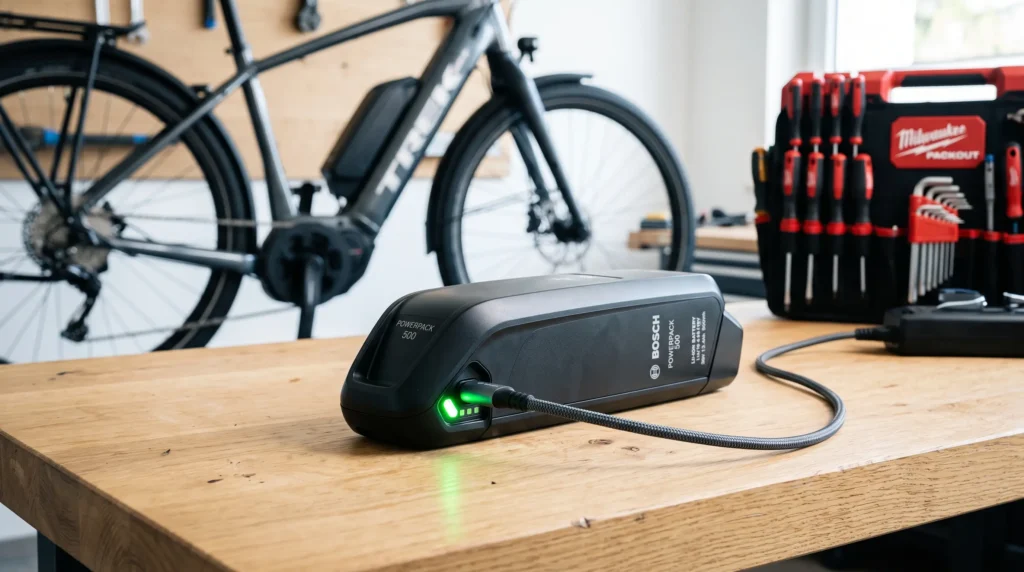
Understanding Your Lithium-Ion Battery
Almost all modern electric bikes run on lithium-ion (Li-ion) chemistry. They are chosen because they are lightweight, dense in energy, and don’t suffer from the “memory effect” of older battery styles.
To care for your battery, it helps to understand what you’re working with. E-bike batteries are categorized by voltage ($V$) and capacity (measured in Amp-hours or Watt-hours).
| Battery Voltage | Typical E-Bike Use Cases |
|---|---|
| 36V | Entry-level, casual city commuters, and lightweight folding bikes |
| 48V | The industry standard; powers most fat-tire, utility, and trail e-bikes |
| 52V | High-performance e-bikes built for steep hills and higher speeds |
| 60V+ | Specialty cargo bikes, heavy-duty utility rides, and off-road beasts |
Best Charging Practices to Double Battery Lifespan
Charging habits have the single greatest impact on how long your battery lasts. Here is how to do it right.
1. Always Use the Original Charger
It’s tempting to buy a cheap backup charger online, but don’t do it. The charger supplied by your manufacturer is precisely tuned to your battery’s Battery Management System (BMS). Third-party chargers can deliver incorrect currents, leading to:
- Overheating and fire hazards
- Degraded cell chemistry
- Voided manufacturer warranties
Place #1: Under “1. Always Use the Original Charger”
If you have a standard 48V setup and need a replacement, make sure it is certified. Check out highly-rated options like the UL-Certified 48V E-Bike Chargers on Amazon to protect your battery cells from overcharging.
2. Embrace the “80/20” Rule
Lithium-ion batteries experience the most stress when they are completely full (100%) or completely empty (0%).
- For daily rides: Charge your battery to around 80% to 90%.
- For long weekend adventures: Go ahead and charge it to 100%, but try to ride shortly after charging rather than letting it sit at 100% for days.
3. Avoid the “Dead Battery” Zone
Repeatedly draining your battery to 0% causes deep discharge stress, which permanently reduces its capacity. Try to plug your bike in once it hits 20% to 30% capacity.
4. Charge at Room Temperature
Never charge a freezing cold or scorching hot battery. The ideal charging environment is between 50°F and 77°F (10°C to 25°C). If you’ve just come in from a freezing winter ride or a hot summer cruise, let the battery acclimate to indoor temperatures for 30 minutes before plugging it in.
How to Store Your E-Bike Battery Safely
If you’re packing your bike away for the winter, storage conditions will make or break your battery’s health.
Store at 40% to 60% Charge
Never store your battery completely empty (it might brick itself permanently) or completely full (which keeps the cells under high chemical tension). Keep it hovering around half-charged.
Keep It Indoors
Garages, sheds, and outdoor storage units are hotbeds for extreme temperature swings and moisture. Store your battery in a climate-controlled indoor space like a closet or basement.
Perform a Monthly Health Check
Batteries slowly discharge on their own over time. Set a calendar reminder once a month to check the battery charge. If it has dipped below 30%, plug it in just long enough to bring it back up to that happy 50% sweet spot.
General Maintenance and Protection
Ditch the Pressure Washer
While most modern e-bike batteries are water-resistant, they are not waterproof. High-pressure washers can easily force water past protective rubber seals and ruin your electronics. Instead:
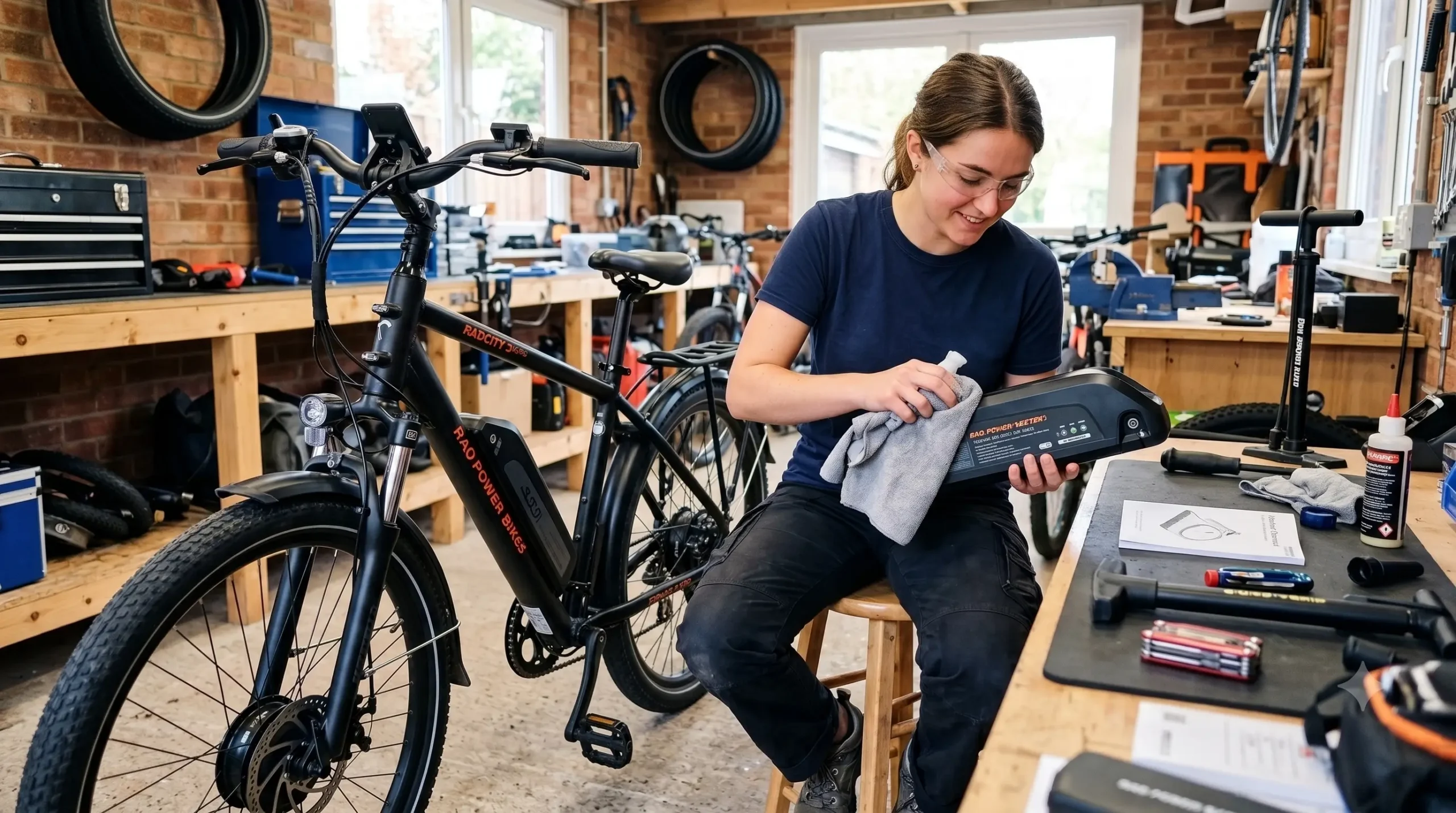
- Wipe down the battery casing with a damp microfiber cloth.
- Use a dry brush or contact cleaner to keep the metal terminals clean.
- Ensure the port is 100% dry before plugging in your charger.
Battle the Heat
Heat is the ultimate supervillain for lithium-ion cells. Avoid leaving your bike baking inside a locked car trunk on hot summer days, and never park your bike in direct, intense sunlight for hours at a time.
Cold Weather Riding Tips
Winter shouldn’t stop you from riding, but you will notice a temporary drop in battery range (up to 20% to 30%) when temperatures dip below freezing. To mitigate this:
- Keep it warm beforehand: Keep the battery indoors until the exact moment you are ready to step outside and ride.
- Use a neoprene battery cover: These covers act like a winter coat for your battery, trapping the natural heat generated during discharge.
- Warm up before charging: Never charge a battery that is below freezing; it can cause permanent damage to the anode.
Signs Your Battery Needs to Be Replaced
Like all consumables, e-bike batteries will eventually reach the end of their natural life. Keep an eye out for these red flags:
- Severe range anxiety: You are suddenly getting half the mileage you used to.
- Sluggish performance: The motor feels weak, even on a full charge.
- Inconsistent readings: The battery bar jumps wildly from 80% to 20% within minutes.
- Physical warnings: Any swelling, cracking, hot spots during charging, or unusual smells are critical warning signs. If you see physical deformation, stop using the battery immediately.
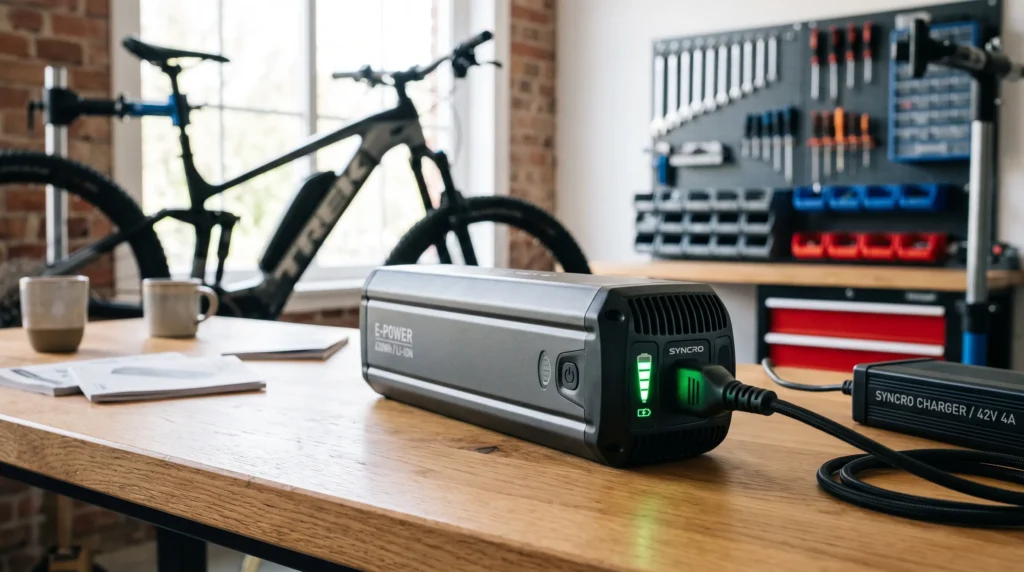
Tips to Maximize Your Range on Every Ride
Want to get more miles out of a single charge? Optimize your riding habits:
- Check your tire pressure: Under-inflated tires create massive rolling resistance, forcing your motor to work twice as hard.
- Shift gears efficiently: Start in a low gear and shift up as you gain speed—just like driving a manual car.
- Lighten the load: Clean out unnecessary cargo from your panniers.
- Lubricate your chain: A clean, well-greased drivetrain reduces mechanical drag.
Frequently Asked Questions
Should I charge my e-bike battery after every single ride?
Only if you’ve gone on a long ride that drained the battery below 50%. For short, casual rides, it’s actually healthier to leave it and wait until it drops to about 30% before charging it back up.
Can I leave my e-bike battery charging overnight?
While modern chargers have automatic shut-offs, it is best practice not to leave your battery plugged in for days on end. Unplug it once it’s fully charged to prevent trickle-charging wear and to maximize safety.
Can cold weather permanently damage my battery?
Cold weather only temporarily reduces your range. However, charging your battery while it is frozen will cause permanent, irreversible damage to the internal cells.
Key Takeaways
- Always use the manufacturer-approved charger.
- Keep your daily charge level between 20% and 80%.
- Never charge a freezing or overheated battery.
- Store your battery indoors at roughly 50% charge during the off-season.
- Keep your tire pressure optimized to get the most mileage out of every charge.
Conclusion
Proper battery care is one of the easiest ways to protect your investment and enjoy years of reliable e-bike performance. By following safe charging habits, storing your battery correctly, and avoiding extreme temperatures, you can maximize both battery lifespan and riding range while reducing the risk of costly replacements.
Whether you use your e-bike for commuting, trail riding, or weekend adventures, a well-maintained battery will keep you riding farther, safer, and with greater confidence.