Electric Bike Maintenance: The Ultimate Guide to E-Bike Care
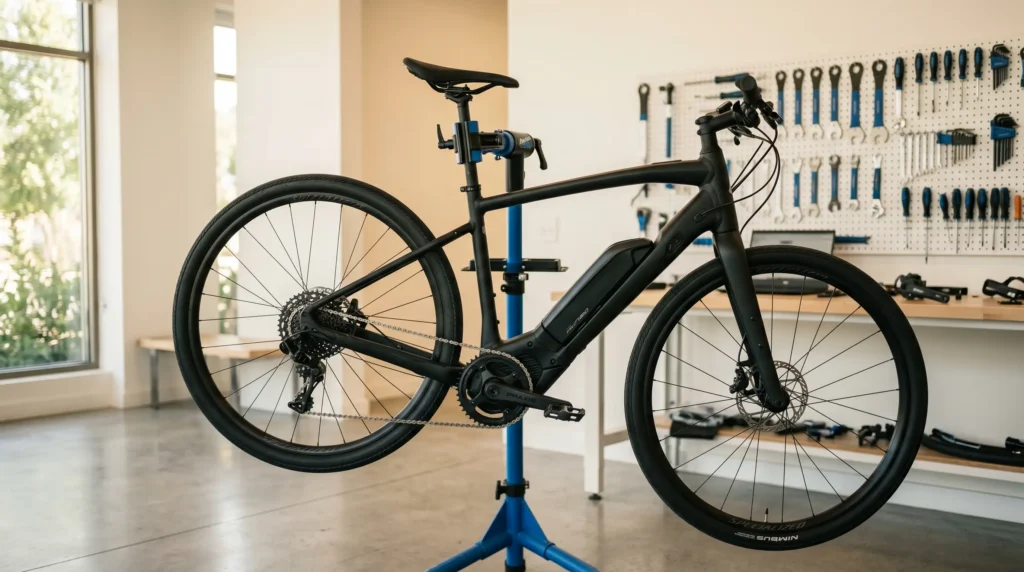
Buying an electric bike is an investment in your health, your commute, and your freedom. Whether you’re riding a high-end mid-drive mountain bike or a foldable commuter, your e-bike is a sophisticated machine that blends traditional bicycle mechanics with advanced electrical engineering.
However, many riders treat their e-bikes like “set-and-forget” appliances. This is a costly mistake. Without regular electric bike maintenance, components wear out faster, battery range drops, and safety risks increase.
As a veteran technician with over a decade of experience in the shop, I’ve seen $5,000 bikes ruined by simple neglect and $500 bikes last for years through disciplined e-bike care. In this comprehensive guide, I’ll walk you through everything you need to know about how to maintain an e-bike, from basic weekly cleaning to advanced electric bike servicing.
Why Electric Bike Maintenance Matters
Maintaining an e-bike isn’t just about keeping it shiny; it’s about performance, safety, and financial savvy.
1. Improves Safety
E-bikes are heavier and faster than traditional bicycles. This puts immense stress on the braking system and tires. Regular e-bike maintenance ensures that when you need to stop suddenly in traffic, your brakes respond instantly.
2. Extends Battery Life
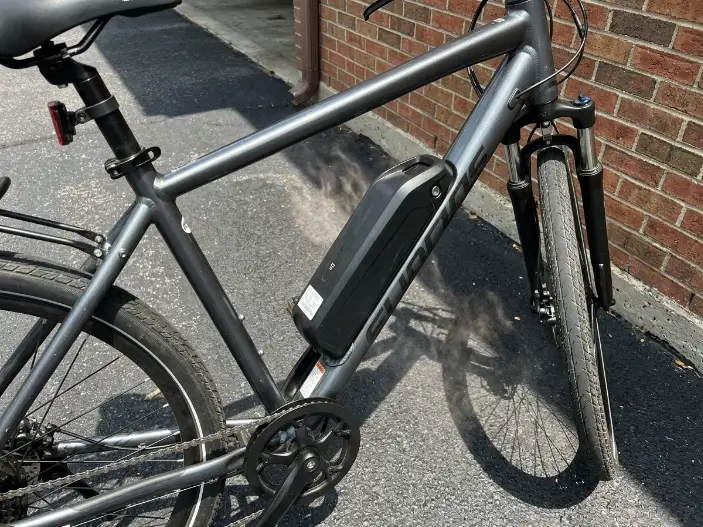
The battery is the most expensive component of your bike. Proper e-bike battery maintenance can be the difference between a battery that lasts two years and one that lasts five.
3. Protects the Motor
An electric bike motor is generally a closed system, but a neglected drivetrain forces the motor to work harder, leading to overheating and premature internal wear.
4. Prevents Costly Repairs
A $15 bottle of chain lubricant can prevent you from having to replace a $200 cassette and a $60 chain. Electric bike upkeep is about spending pennies today to save hundreds tomorrow.
5. Increases Resale Value
If you ever decide to upgrade, a well-documented e-bike maintenance checklist and a pristine frame will significantly boost your resale price.
Essential E-Bike Maintenance Tools
Before we dive into the “how,” you need the right gear. You don’t need a professional workshop, but these essentials are non-negotiable for DIY bike maintenance enthusiasts. Having high-quality tools prevents stripped bolts and ensures your electric bike maintenance is performed accurately.
| Tool | Recommended Product | Purpose | Why It’s Essential |
|---|---|---|---|
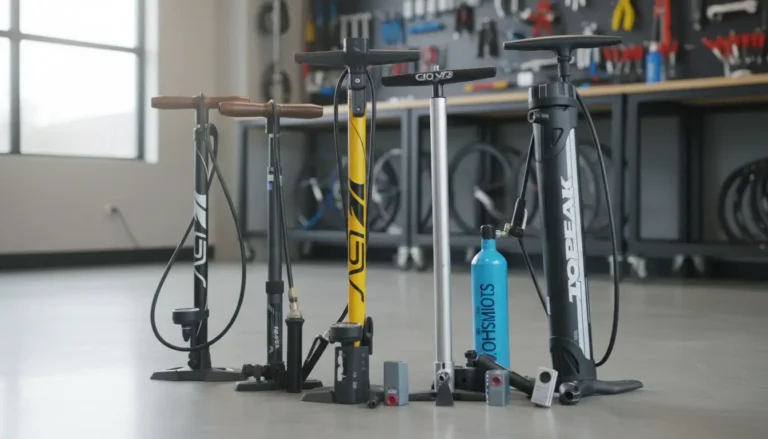
| Bike Pump w/ Gauge | Topeak JoeBlow Sport III | Inflation | Maintains tire pressure for range and grip. |
| Tire Pressure Gauge | Topeak SmartGauge D2 | Precision | Digital gauges offer better accuracy for heavy e-bike tires. |
| Allen Key Set (Hex) | Bondhus Balldriver Set | Tightening | Fits 90% of the bolts on your e-bike frame and motor. |
| Torque Wrench | PRO BIKE TOOL Set | Safety | Prevents over-tightening bolts on sensitive components. |
| E-Bike Chain Lube | Finish Line e-Bike Lube | Protection | Bicycle chain lubrication formulated for high torque. |
| Cleaning Brushes | Park Tool Brush Set | Cleaning | Removes grit from the drivetrain maintenance area. |
| Degreaser | Finish Line Speed Degreaser | Deep Cleaning | Breaks down gritty grease on the chain and cassette. |
| Multi-tool | Crankbrothers M19 | Roadside Repair | Your “get home safe” tool for mid-ride issues. |
| Microfiber Cloths | Amazon Basics Cloths | Drying | Safe for the frame and sensitive electronic displays. |
Why Quality Tools Matter for E-Bikes
As a mechanic with 10+ years of experience, I always tell my clients: “Cheap tools cost more in the long run.”
E-bikes use specific torque settings (measured in Newton Meters). If you use a cheap, rounded-off Allen key on a motor mount bolt, you risk stripping the head, which can turn a 5-minute adjustment into a $200 shop repair. Investing in a proper torque wrench and e-bike chain lube specifically designed for high-torque mid-drive motors is the best way to ensure your electric bicycle maintenance is done right the first time.
E-Bike Maintenance Checklist
Use this checklist to stay on top of your electric bicycle maintenance schedule.
☐ Before Every Ride (The “ABC” Check)
- [ ] Air: Squeeze the tires; check for the correct PSI.
- [ ] Brakes: Pull the levers to ensure they engage before hitting the handlebar.
- [ ] Chain/Cables: Ensure the chain isn’t bone-dry and the display powers on.
☐ Weekly Maintenanc e
- [ ] Wipe down the frame with a damp cloth.
- [ ] Check for loose bolts (especially fenders and racks).
- [ ] Inspect tires for glass, thorns, or debris.
- [ ] Apply a fresh drop of lubricant to the chain.
☐ Monthly Maintenance
- [ ] Deep clean the drivetrain using a degreaser.
- [ ] Check brake maintenance—inspect pad thickness.
- [ ] Check for firmware updates via the manufacturer’s app.
- [ ] Inspect the battery mounting points for dirt.
☐ Seasonal Maintenance (Every 6 Months)
- [ ] Full professional electric bike servicing.
- [ ] Check spoke tension.
- [ ] Replace brake pads if worn.
- [ ] Inspect all electrical connections for corrosion.
Battery Maintenance Tips: The Heart of Your E-Bike
The battery is the “fuel tank” of your commuter e-bike. If you want to maintain maximum range, follow these rules for e-bike battery care.
How to Charge Properly
Avoid charging to 100% after every short 2-mile ride. Lithium-ion batteries prefer being kept between 20% and 80% charge. If you’re riding daily, a full charge is fine, but if the bike will sit for a few days, keep it at 60%.
Ideal Storage Conditions
Temperature is the enemy of e-bike battery maintenance. Never store your battery in a freezing garage or a scorching car. Room temperature (approx. 68°F / 20°C) is the “Goldilocks” zone for longevity.
Avoiding Deep Discharges
Never leave your battery at 0% for an extended period. This can cause the cells to enter a “deep sleep” mode from which they may never recover, requiring a total battery replacement.
Signs of Battery Problems
- The casing feels excessively hot during charging.
- The range drops suddenly by more than 30%.
- The battery takes significantly longer to reach a full charge.
Motor Maintenance: What You Need to Know
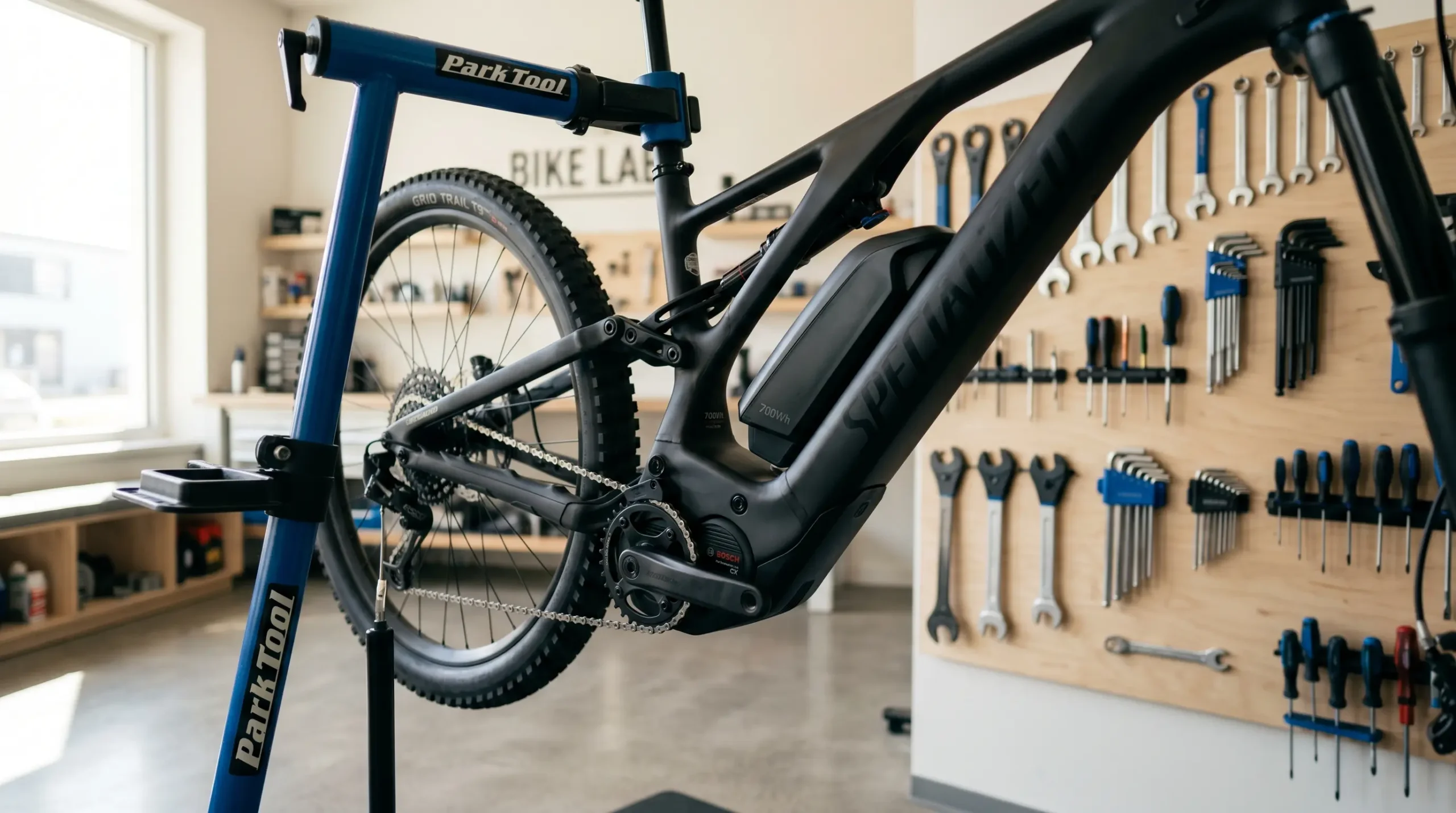
Most modern electric bike motors (Bosch, Shimano, Brose, Bafang) are sealed units. This means you should never open the motor casing yourself—doing so will void your warranty and likely damage the internal sensors.
Hub Motors
Found mostly on budget-friendly e-bikes, these require very little maintenance other than ensuring the axle nuts are tight and the power cable entering the axle is not frayed or bent.
Mid-Drive Motors
These are integrated into the pedals. Because they drive the chain directly, they put more stress on your gears. Maintenance here involves keeping your chain exceptionally clean to prevent the motor from “grinding” grit through the teeth of your cassette.
When to Seek Professional Service
If you hear a grinding, clicking, or high-pitched whining noise coming from the motor, take it to a certified technician immediately. It could be a bearing issue that is easily fixable before it destroys the internal gears.
Tire Maintenance: The Key to Range and Grip
Tire pressure is the most underrated aspect of e-bike upkeep. Because e-bikes are heavy (often 50–70 lbs), low pressure causes “rolling resistance,” which sucks the life out of your battery.
- Check PSI Weekly: Look at the sidewall of your tire for the recommended range (e.g., 30–50 PSI).
- Inspect Tread Wear: E-bikes accelerate faster, which wears down rear tires quicker than traditional bikes. Replace them when the center tread becomes flat or smooth.
- Preventing Flats: Consider adding a tire sealant (like Slime or Orange Seal) or upgrading to puncture-resistant tires like Schwalbe Marathons.
Brake Maintenance: Stopping Power
Since you’re riding at 20–28 mph, your brake maintenance is a matter of life and death.
- Brake Pad Inspection: Check your pads every 500 miles. If the friction material is thinner than a dime (about 1.5mm), replace them.
- Mechanical vs. Hydraulic: Mechanical brakes need regular cable tension adjustments. Hydraulic brakes need a “bleed” (fluid change) once a year to keep the lever feeling firm.
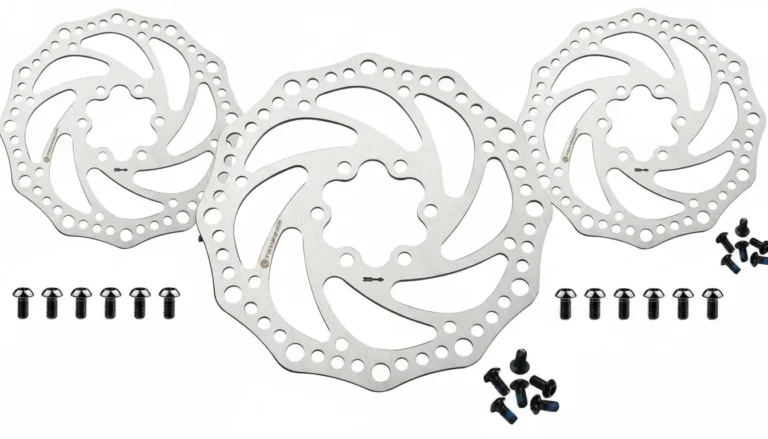
- Rotor Care: Never touch the brake discs (rotors) with your fingers. The oils from your skin can cause “brake squeal” and reduce stopping power. Clean them only with high-percentage Isopropyl Alcohol.
Chain and Drivetrain Maintenance
The drivetrain is the hardest-working part of an e-bike.
Step-by-Step Cleaning:
- Degrease: Apply bike-specific degreaser to the chain while back-pedaling.
- Scrub: Use a stiff brush to remove the black “gunk.”
- Rinse & Dry: Wipe the chain completely dry with a rag.
- Lubricate: Apply one drop of lube to each roller of the chain. Bicycle chain lubrication should be internal, not on the outside of the plates.
- Wipe Excess: After 5 minutes, wipe the chain again. A “wet” looking chain only attracts more dirt.
Cleaning Your Electric Bike Safely
Can you wash an e-bike? Yes. Can you use a pressure washer? Absolutely not.
High-pressure water can bypass the seals on your motor and battery, causing a short circuit. Instead:
- Remove the Battery: If possible, remove the battery and cover the terminals.
- Use a Bucket: Use warm soapy water and a sponge.
- Avoid the “No-Go” Zones: Don’t spray water directly at the motor, the display, or the battery connector.
- Dry Thoroughly: Use a microfiber towel to dry the bike. Never store a “wet” e-bike, as this leads to bolt oxidation and electrical contact corrosion.
Common E-Bike Problems and Solutions
| Issue | Potential Cause | Solution |
|---|---|---|
| Battery Not Charging | Loose connection or tripped BMS. | Check the plug; reset the battery if possible; try a different outlet. |
| Reduced Range | Low tire pressure or old battery. | Inflate tires to max PSI; check battery health at a shop. |
| Motor Cutting Out | Loose speed sensor magnet. | Check the magnet on the rear wheel spoke; ensure it aligns with the sensor. |
| Brake Noise | Contaminated pads or rotors. | Clean rotors with alcohol; sand the pads or replace them. |
| Chain Skipping | Worn chain or derailleur alignment. | Replace chain; adjust cable tension on the shifter. |
Seasonal E-Bike Maintenance
Spring Tune-Up
After a winter of storage, check your tire sidewalls for “dry rot” (cracking) and ensure your firmware is updated.
Winter Storage Tips
If you aren’t riding in winter, do not leave the battery in the cold. Bring the battery inside your house. Store it at roughly 50% charge and check it once a month to ensure it hasn’t dropped to 0%.
When to Service Your E-Bike Professionally
While DIY e-bike repair tips cover the basics, some things require a pro:
- Annual Servicing: A tech can check “spoke tension,” which prevents wheel collapse.
- Electrical Diagnostics: If the screen shows an “Error Code,” you need a diagnostic tool.
- Brake Bleeding: Handling hydraulic fluid is messy and requires specific kits.
- Software Updates: These often improve motor efficiency and battery management.
Common E-Bike Maintenance Mistakes to Avoid
- Over-Lubing: Too much lube creates a “grinding paste” that eats your gears.
- Ignoring the “Clunk”: If something sounds loose, it is. Tighten it before it falls off.
- Storing a Dead Battery: This is the #1 cause of “dead” e-bikes in the spring.
- Using WD-40 on a Chain: Standard WD-40 is a solvent, not a lubricant. Use bike-specific oil.
- Pressure Washing: I’ve seen $8,000 bikes ruined by a 2-minute trip to the car wash.
Pro Tips for Extending E-Bike Lifespan
- Pedal More: Don’t rely solely on the throttle. Using your gears helps the motor run in its “efficiency band.”
- Shift Early: Don’t shift gears while the motor is under full load (uphill). Ease off the pedals for a split second when shifting.
- Keep it Clean: A clean bike is a fast bike. Dirt equals friction.
- Check the Magnet: That tiny magnet on your rear spoke is the “heartbeat” of your bike. If it’s loose, the bike won’t run.
Frequently Asked Questions (FAQ)
How often should an electric bike be serviced?
A professional tune-up is recommended every 1,000 miles or once a year, whichever comes first. However, safety checks should be done weekly.
How long does an e-bike battery last?
Most high-quality lithium batteries last 500 to 1,000 full charge cycles. With good e-bike care, this usually translates to 3–5 years of use.
Can I wash my electric bike with water?
Yes, but use a low-pressure hose or a bucket. Avoid the motor and electrical ports.
How often should I lubricate the chain?
Every 100 miles, or after any ride in the rain.
What maintenance does an e-bike require?
It requires traditional bike maintenance (brakes, tires, gears) plus electrical maintenance (battery care, firmware updates, sensor cleaning).
How do I increase battery lifespan?
Keep it between 20-80% charge, store it at room temperature, and avoid using “Turbo” mode for every single ride.
Are e-bikes expensive to maintain?
Slightly more than a regular bike because they wear out tires and chains faster, but they are significantly cheaper than maintaining a car.
Can I repair my e-bike myself?
You can do mechanical repairs (tires, chains, brakes). Do not attempt to repair the motor or battery internals yourself.
How often should brake pads be replaced?
On an e-bike, check them every 500 miles. Heavy riders or those in hilly areas may need to replace them more often.
How do I store an e-bike during winter?
Store the bike in a dry place and the battery inside your home at 50% charge.
Conclusion
Regular electric bike maintenance is the secret to a bike that feels brand new for years. By following a consistent e-bike maintenance checklist, paying attention to e-bike battery maintenance, and keeping your drivetrain clean, you ensure that every ride is safe, efficient, and fun.
Don’t wait for something to break. Grab a pump, some lube, and a rag today. Your e-bike (and your wallet) will thank you.

![[Reviewed: Canyon Roadlite WMN CF 8.0 - A Fitness Bike that Feels Like Freedom]](https://www.e-biketools.com/wp-content/uploads/2026/01/Reviewed-Canyon-Roadlite-WMN-CF-8.0-A-Fitness-Bike-that-Feels-Like-Freedom-2-768x432.webp)