Electric Bike Buying Guide: Expert E-Bike Technician Tips & Tools
Electric bikes have rapidly transformed modern cycling. Whether you’re commuting through the city, tackling steep hills, or managing a repair workshop, choosing the right e-bike-and maintaining it correctly-makes all the difference.
As a professional e-bike technician, I’ve seen one consistent issue: many riders invest heavily in an electric bike but underestimate the importance of proper tools and maintenance equipment. The result? Avoidable breakdowns, reduced battery life, and costly repairs.
This guide will walk you through everything you need to know-from selecting the right e-bike to understanding essential e-bike tools, electric bike maintenance practices, and professional-grade repair equipment used in workshops.
Why Proper Tools Matter for E-Bike Maintenance
Unlike traditional bicycles, electric bikes combine mechanical systems with electrical components such as motors, sensors, and battery management systems. That means standard bike tools are often not enough.
Using the wrong tools can lead to:
- Damaged battery connectors
- Stripped motor bolts
- Faulty torque sensor readings
- Unsafe brake or drivetrain installation
Professional e-bike repair tools ensure precision, safety, and long-term reliability.
For example, tightening a motor mount without a torque wrench can lead to vibration damage over time—something I regularly see in repair shops.
Understanding Electric Bikes Before You Buy
Before diving into tools and maintenance, it’s important to understand what you’re buying.
1. Types of E-Bikes
- Commuter E-Bikes – Designed for daily travel and urban riding
- Mountain E-Bikes (e-MTBs) – Built for off-road terrain and power assistance
- Cargo E-Bikes – Heavy-duty bikes for transporting goods or passengers
- Folding E-Bikes – Compact bikes for storage and portability
2. Key Components
- Motor (hub or mid-drive)
- Battery (measured in Wh capacity)
- Controller unit
- Torque sensor or cadence sensor
- Display panel
Each of these components requires specific electric bike maintenance tools for proper servicing.
Essential E-Bike Tools Every Owner Should Have
Whether you’re a DIY rider or a repair technician, investing in professional bike tools is non-negotiable.
Below is a breakdown of the most important tools and their use cases.
1. Torque Wrench Set
A torque wrench is one of the most critical e-bike tools.
Why it matters:
E-bike components require precise tightening to manufacturer specifications.
Used for:
- Motor mounts
- Crank arms
- Stem and handlebar bolts
- Battery brackets
Over-tightening can crack carbon frames or damage aluminum threads.
2. Chain Wear Indicator Tool
Electric bikes put extra stress on chains due to motor assistance.
Used for:
- Measuring chain elongation
- Preventing cassette wear
- Maintaining drivetrain efficiency
Replacing a chain early saves hundreds in drivetrain replacement costs.
3. E-Bike Diagnostic Tool
Modern electric bikes often require software-level diagnostics.
Used for:
- Reading motor error codes
- Checking battery health
- Resetting system faults
This is essential for any serious workshop offering e-bike repair tools services.
4. Cable and Wire Stripping Tools
Electric bikes rely heavily on wiring systems.
Used for:
- Motor cable repair
- Display wiring adjustments
- Battery connector maintenance
Clean stripping ensures proper conductivity and avoids short circuits.
5. Hydraulic Brake Bleed Kit
Most modern e-bikes use hydraulic braking systems.
Used for:
- Removing air from brake lines
- Restoring braking power
- Preventing brake fade
6. Crank Puller Tool
Essential for mid-drive motor e-bikes.
Used for:
- Removing crank arms safely
- Motor servicing access
- Drivetrain maintenance
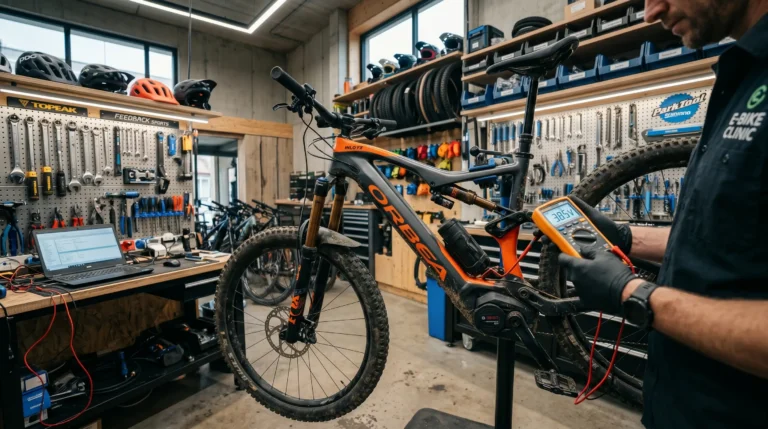
7. Multimeter (Electrical Testing Tool)
A must-have for diagnosing electrical issues.
Used for:
- Checking battery voltage
- Testing continuity
- Identifying wiring faults
8. Specialized E-Bike Tool Kits
Many technicians prefer complete kits that include:
- Hex key sets
- Chain tools
- Torque tools
- Spoke wrenches
Example kits available here:
Safety Considerations for Electric Bike Maintenance
Working on electric bikes introduces risks not found in standard bicycles.
1. Battery Safety
- Never open a lithium battery pack without training
- Avoid puncturing or overheating cells
- Always disconnect power before maintenance
2. Electrical Shock Risk
While e-bike systems are low voltage, improper handling can still cause:
- Short circuits
- Component burnout
- Fire hazards in rare cases
3. Motor Safety
Mid-drive motors contain high torque systems. Always:
- Disconnect battery first
- Secure crank arms before removal
- Use correct torque settings
Common Mistakes When Using Improper Tools
In my experience as a technician, these are the most frequent errors:
1. Using Standard Bike Tools on E-Bikes
Regular tools often lack the precision required for electrical components.
2. Ignoring Torque Specifications
This leads to stripped bolts and structural damage.
3. Poor Cable Handling
Pinched or damaged cables can disable the entire system.
4. Skipping Diagnostics
Many riders replace parts unnecessarily instead of using a proper e-bike diagnostic tool.
Pro Technician Tips for Electric Bike Maintenance
Here are insights I typically share with new workshop technicians:
Tip 1: Always Start with Diagnostics
Never guess-scan the system first.
Tip 2: Keep a Dedicated E-Bike Tool Kit
Mixing traditional and electric bike tools leads to confusion and errors.
Tip 3: Clean Before You Repair
Dust and grime often hide wiring or sensor issues.
Tip 4: Document Torque Settings
Every e-bike model has different requirements.
Tip 5: Inspect Battery Mounts Regularly
Loose battery mounts are a common cause of intermittent power failure.
Recommended E-Bike Tools (Professional Setup)
If you’re setting up a workshop or upgrading your toolkit, consider sourcing high-quality tools:
- Professional torque wrench set
- Hydraulic brake bleeding kit
- Full diagnostic scanner
- Heavy-duty crank puller
- Electrical testing multimeter
Shop professional tools here:
Electric Bike Maintenance Best Practices
To extend the life of your e-bike:
- Clean drivetrain every 1–2 weeks
- Charge battery correctly (avoid full discharge)
- Inspect brake pads monthly
- Check tire pressure regularly
- Perform full system diagnostics every few months
Proper electric bike maintenance is the difference between a bike that lasts 2 years and one that lasts 8+ years.

FAQ – Electric Bike Tools & Maintenance
Do I really need special tools for an e-bike?
Yes. E-bikes require precision tools due to electrical components and torque-sensitive parts.
Can I use regular bike tools for maintenance?
Some can be used, but most e-bike repair tools are specifically designed for safety and accuracy.
How often should I service my e-bike?
Light maintenance every month, full inspection every 3–6 months depending on usage.
What is the most important e-bike tool?
A torque wrench and diagnostic tool are the two most critical.
Are e-bike repair tools expensive?
Basic kits are affordable, while professional diagnostic tools cost more but save money long-term.
Conclusion: Build a Smarter E-Bike Maintenance Routine
Electric bikes are powerful, efficient, and highly technical machines. But their performance depends heavily on proper care and the right equipment.
Investing in quality e-bike tools, following correct electric bike maintenance procedures, and using professional-grade e-bike repair tools will not only extend your bike’s lifespan but also improve safety and riding performance.
At E-BikeTools.com, the goal is simple: equip riders and technicians with the tools they need to work smarter, safer, and more efficiently.
Explore professional tools and upgrade your workshop setup today:
Shop E-Bike Tools on Amazon